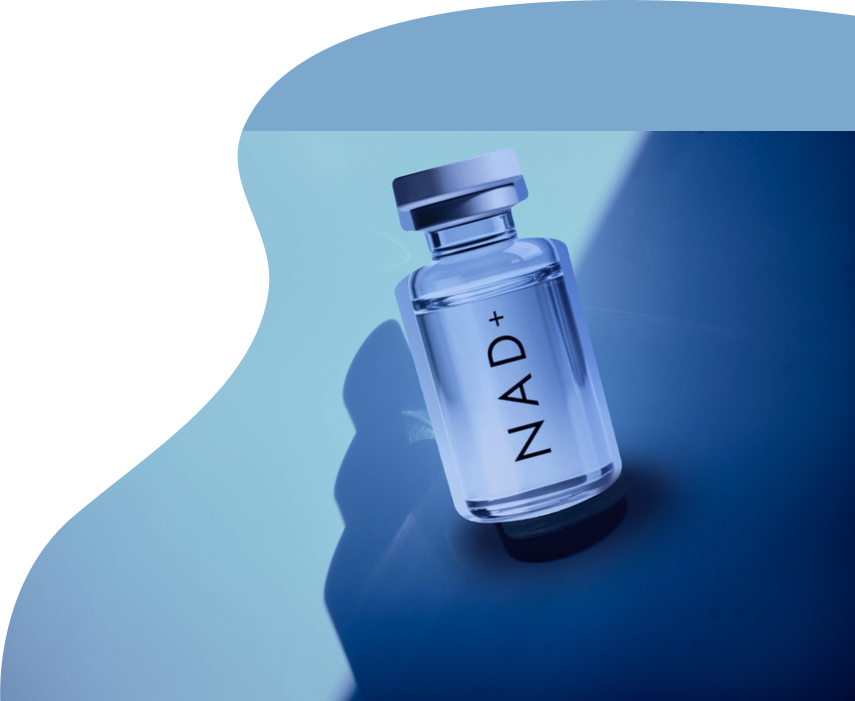
NAD+ is a coenzyme every cell uses to turn food into usable energy and to run DNA repair. Levels fall with age, and raising them is one of the more active areas of longevity research. Given intravenously, NAD+ has to go in slowly — pushed too fast it produces a well-known wave of chest tightness, cramping and nausea, which is why a full infusion is a commitment of one to several hours. An intramuscular injection sidesteps that: a smaller dose, absorbed over hours rather than arriving all at once, and you are out of the clinic in minutes.
People come to us for NAD+ around energy, mental clarity and recovery. It is worth being straight about the evidence: NAD+ precursors reliably raise NAD+ levels in humans, and pharmacokinetic work on intravenous NAD+ shows how quickly the body takes it up and metabolises it. What those changes translate to clinically is still being worked out. We would rather set an honest expectation than sell you a certainty — and our physician will tell you plainly if something else on the menu fits your goal better.
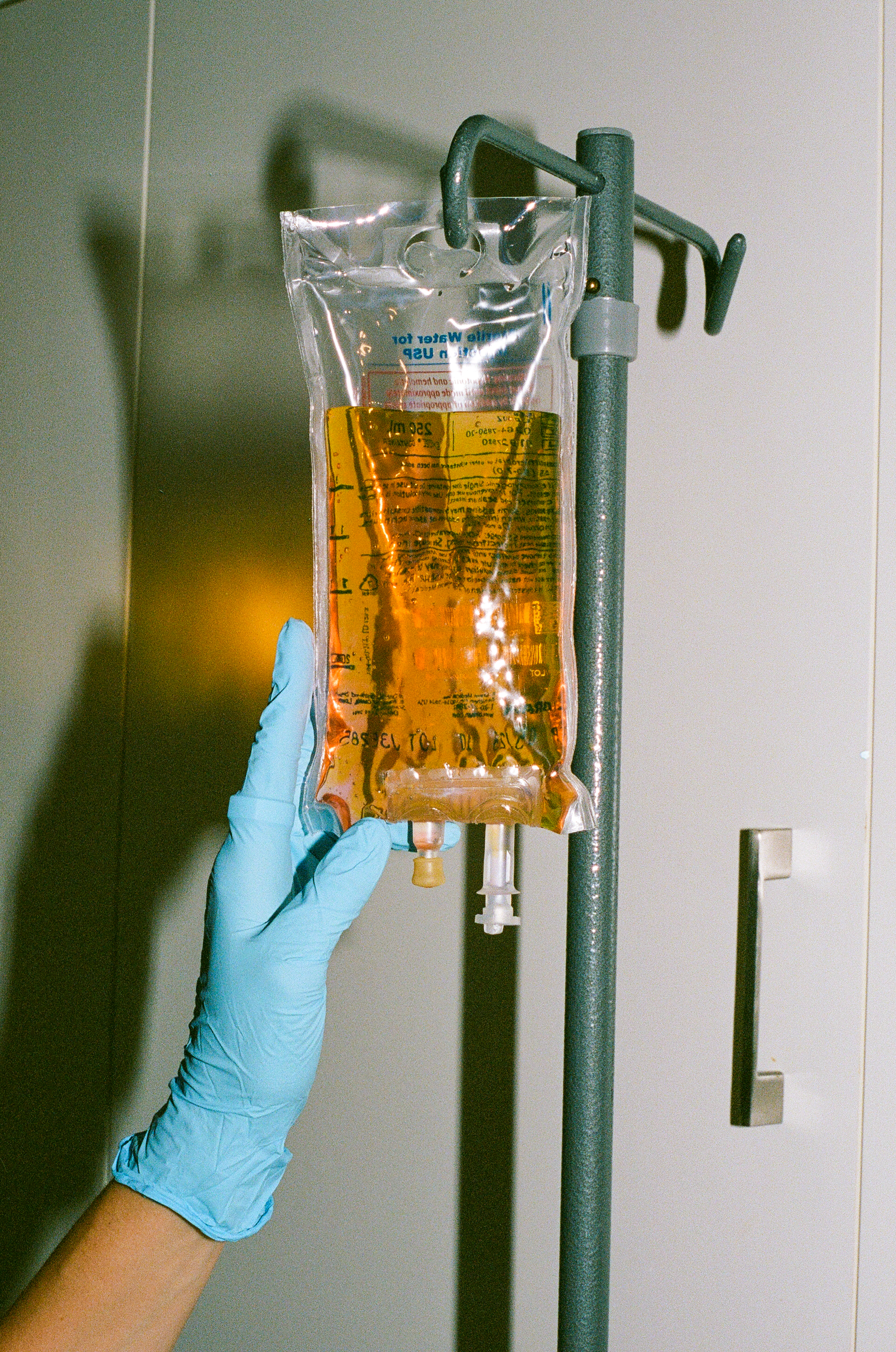
NAD+ — nicotinamide adenine dinucleotide — is a coenzyme every cell uses to convert food into usable energy and to run DNA repair. Levels decline with age, and restoring them is one of the more active areas of longevity research. Injecting NAD+ raises circulating levels; pharmacokinetic work on a six-hour intravenous NAD+ infusion shows the body takes it up and metabolises it quickly, which is exactly why the delivery rate matters as much as the dose.
Delivered too quickly by IV, NAD+ produces a well-known cluster of side effects. In a 2026 tolerability study, every patient receiving intravenous NAD+ reported moderate to severe abdominal cramping, nausea, chest pressure and elevated heart rate — all of which resolved when the infusion slowed or stopped. That is why our IV protocol is one to several hours per session, and why the intramuscular route exists at all. An IM dose absorbs gradually over the hours that follow rather than arriving all at once, so most of that reaction is sidestepped.
What the elevated NAD+ levels translate to clinically is still being worked out. Chronic supplementation with the NAD+ precursor nicotinamide riboside reliably elevates blood NAD+ in healthy middle-aged and older adults and is well tolerated, but the outcome trials for energy, cognition and longevity endpoints are still limited. We would rather set an honest expectation than sell you a certainty — which is why we start almost everyone at 10 mg and titrate up only as it is comfortably tolerated.
Physician-supervised at both locations. Our clinical team sets the dose and the interval, and if you are working toward a therapeutic total we will move you onto the full IV protocol rather than stacking injections.
An intramuscular NAD+ dose suits some goals better than a full infusion, and suits some people better than NAD+ at all. Reasons our patients choose the injection include:


An intramuscular dose absorbs gradually instead of arriving all at once — which is what makes it both shorter and better tolerated than the intravenous route.

Book directly for a straightforward injection. If you are treating something specific — persistent fatigue, cognitive symptoms, recovery after illness — start with a wellness intake instead, so our physician can tell you whether NAD+ is the right lever or whether something else fits better. Eat normally and hydrate beforehand.
Almost everyone starts at 10 mg. The injection is intramuscular and takes moments. Because NAD+ is titrated rather than fixed, your first appointment is as much about establishing how you tolerate the dose as it is about the dose itself.
No recovery time — you can drive yourself home. The injection site can ache for a day. The flushing, chest tightness and cramping people associate with NAD+ come from intravenous infusion delivered too quickly, and are far less common with an intramuscular dose that absorbs gradually.
$40 for 10 mg, $65 for 50 mg, $115 for 100 mg and $215 for 200 mg — or five-packs at $180, $290, $520 and $975. We move up through the doses only as each is comfortably tolerated. If you are working toward a therapeutic total, we will move you onto the full IV protocol rather than stacking injections.
NAD+ therapy at Upper Room Clinic is overseen by Dr. Biljana Kostovic, a physician with over 30 years of clinical experience spanning emergency medicine, pain medicine and integrative care. We run the full NAD+ IV protocol alongside the injection, which means we can tell you honestly which of the two your goal actually calls for — and when NAD+ is not the most direct answer to what you are describing.
With locations in Davisville, Toronto and Oakville, you do not need a referral to be seen. Start at 10 mg, see how you tolerate it, and build from there. If you are working toward a therapeutic total we will move you onto the infusion rather than stacking injections — monitored, physician-supervised care in a medical clinic rather than a walk-in drip lounge.


Contact Us
Locations
Upper Room Clinic – Oakville
Tel: 647-521-8024 ext. 2
Fax: (289) 644-0255
oakville@upperroomclinic.com
Upper Room Clinic – Davisville
Tel: 647-521-8024
Fax: 647-348-8024
hello@upperroomclinic.com
Tuesday to Saturday
11am-6pm
Stay connected
Sign up to receive updates, offers, and the latest news directly to your inbox.
Copyright © 2026 Upper Room Clinic | Privacy Policy | Terms of Use
